
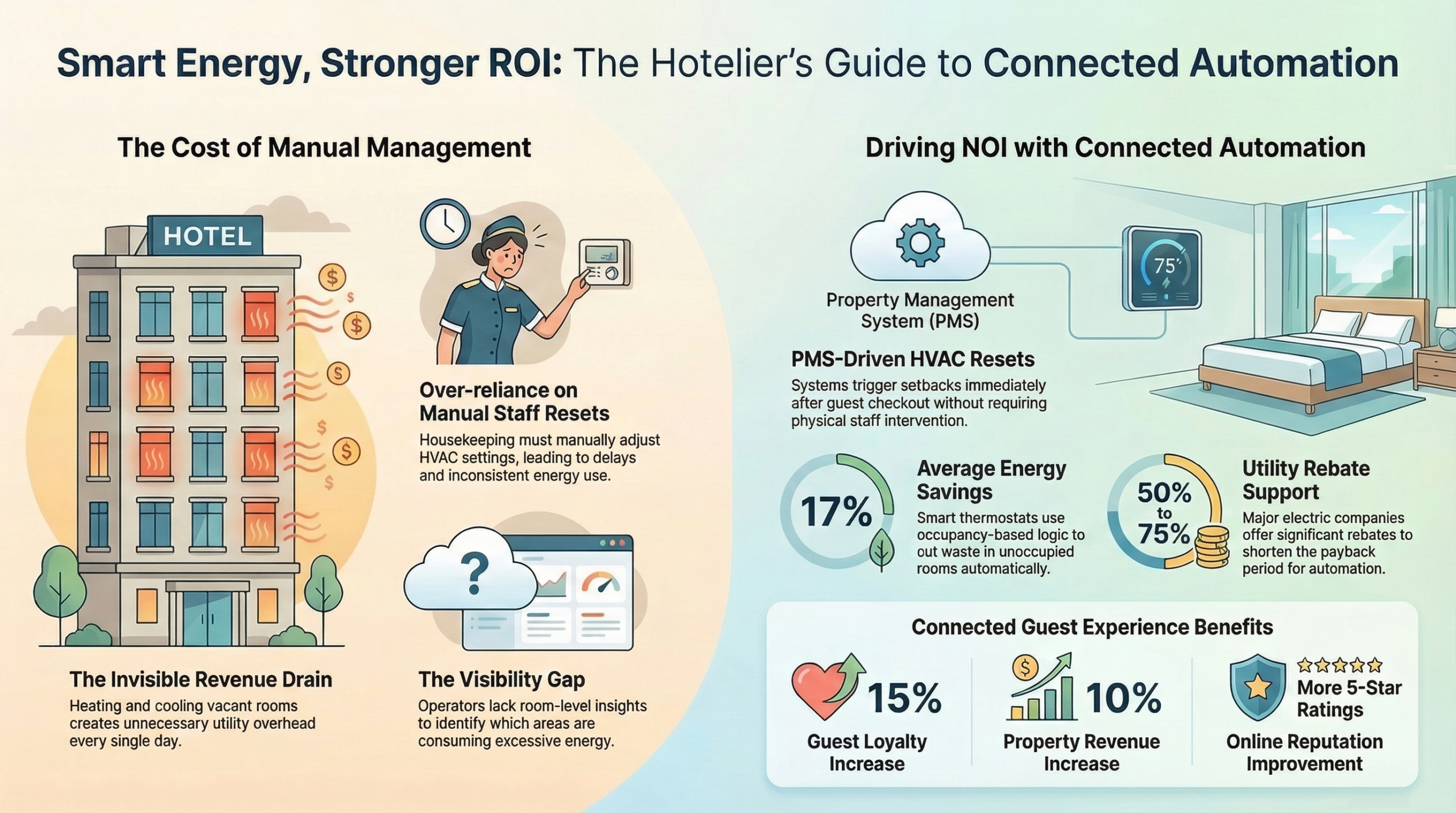
In the modern hospitality landscape, the first point of physical contact a guest has with their stay isn’t the front desk—it’s their room door. As hotels transition toward a fully connected hotel automation ecosystem, the smart lock has evolved from a simple security device into a cornerstone of guest service and operational efficiency.
Moving Beyond Keyless Entry
To truly improve the service delivery of a property, a smart lock must do more than just replace a physical key. True improvement comes from PMS integration, allowing the lock to become part of a synchronized workflow. When a lock is connected to the hotel’s daily operations, it eliminates the friction of manual check-ins and the common “lost key” frustrations that often detract from guest satisfaction.
How Smart Locks Improve Service Delivery
Seamless Guest Access:
By utilizing a guest-facing web link instead of requiring a clunky app download, hotels can offer immediate access the moment a room is ready. This convenience is a primary driver for more 5-star ratings and increased guest loyalty.
Operational Agility:
Connected locks allow management to monitor room status and access logs remotely. This reduces the dependency on staff to manually manage room security and resets, allowing your team to focus on high-touch guest interactions rather than administrative tasks.
Enhanced Security & Analytics:
Unlike traditional keys, smart locks provide real-time visibility into who enters a room and when. This data, when integrated with a centralized dashboard, helps operators maintain a consistent and secure environment across all rooms.
The Bottom Line:
Improving your lock system is about more than just hardware; it is a financial and service strategy. By integrating smart locks into a broader smart hospitality platform, properties can see up to 15% more loyalty and a significant boost in revenue through modernized, digital-first experiences.